ΈΡΕΥΝΑ ΓΙΑ ΤΗΝ ΑΝΤΙΛΗΨΗ ΠΙΝΑΚΩΝ ΖΩΓΡΑΦΙΚΗΣ ΜΕΣΩ ΛΕΚΤΙΚΩΝ ΠΕΡΙΓΡΑΦΩΝ ΑΠΟ ΑΤΟΜΑ ΜΕ ΟΠΤΙΚΗ ΑΝΑΠΗΡΙΑ – Διπλωματική Εργασία της Μαλιοτοπούλου Ειρήνης – ΠΑΝΕΠΙΣΤΗΜΙΟ ΜΑΚΕΔΟΝΙΑΣ, Τμήμα Εκπαιδευτικής και Κοινωνικής Πολιτικής Πρόγραμμα Μεταπτυχιακών Σπουδών: «Επιστήμες της αγωγής: Ειδική Αγωγή, Εκπαίδευση και Αποκατάσταση» – Μέρος 45ο
ΒΙΒΛΙΟΓΡΑΦΙΑ
Andersen, E. S., Dunlea, A. & Kebelis, L. A. (1984) Blind children’s language: resolving some differences. Journal of Child Language, 11, 645–664.
Andersen, E. S., Dunlea, A. &Kebelis, L. A. (1993) The impact of input: language acquisition in the visually impaired. First Language, 13, 23–49.
Anderson, D. W., & Olson, M. R. (1981). Word Meaning among Congenitally Blind Children. Journal of Visual Impairment & Blindness, 75(4), 165–168. https://doi.org/10.1177/0145482×8107500404
Arnheim, R. (1990). Perceptual Aspects of Art for the Blind. Journal of Aesthetic Education, 24(3), 57–65. https://doi.org/10.2307/3332799
Axel, E. S., & Levent, N. S. (2003). Art beyond sight: A resource guide to art, creativity, and visual impairment. Princeton, N.J: Recording for the Blind & Dyslexic.
Barnes, C. (2003) ‘Effecting Change; Disability, Culture and Art?’ Paper presented at the Finding the Spotlight Conference. Liverpool Institute for the Performing Arts
Barwich, A.-S. (2019). A Critique of Olfactory Objects. Frontiers in Psychology, 10. https://doi.org/10.3389/fpsyg.2019.01337
Bhowmick, A., & Hazarika, S. M. (2017). An insight into assistive technology for the visually impaired and blind people: state-of-the-art and future trends. Journal on Multimodal User Interfaces, 11(2), 149–172. https://doi.org/10.1007/s12193-016-0235-6
Bloch, I. (2020). On linguistic descriptions of image content. Rencontres Francophones Sur La Logique Floue et Ses Applications (LFA), Sete, France. pp.57-64. https://hal.telecom-paris.fr/hal-02927639
Bonanno, G. A. (2004). Loss, Trauma, and Human Resilience: Have We Underestimated the Human Capacity to Thrive After Extremely Aversive Events? American Psychologist, 59(1), 20–28. https://doi.org/10.1037/0003-066x.59.1.20
Bourdieu, P. (2015). Distinction : a social critique of the judgement of taste. Routledge, Taylor & Francis Group. (Original work published 1984)
Bourne, R., Steinmetz, J. D., Flaxman, S., Briant, P. S., Taylor, H. R., Resnikoff, S., Casson, R. J., Abdoli, A., Abu-Gharbieh, E., Afshin, A., Ahmadieh, H., Akalu, Y., Alamneh, A. A., Alemayehu, W., Alfaar, A. S., Alipour, V., Anbesu, E. W., Androudi, S., Arabloo, J., … Vos, T. (2021). Trends in prevalence of blindness and distance and near vision impairment over 30 years: an analysis for the Global Burden of Disease Study. The Lancet Global Health, 9(2), e130–e143. https://doi.org/https://doi.org/10.1016/S2214-109X(20)30425-3
Brambring, M., & Asbrock, D. (2010). Validity of False Belief Tasks in Blind Children. Journal of Autism and Developmental Disorders, 40(12), 1471– 1484. https://doi.org/10.1007/s10803-010-1002-2
Braun, S. (2008). Audiodescription Research: State of the Art and Beyond. Papers from the Centre for Translation Studies.
Braun, S. (2012). Creating Coherence in Audio Description. Meta, 56(3), 645–662. https://doi.org/10.7202/1008338ar
Campbell, L., Lee, A., &Mccall, C. (2017). SIGHT (UN)SPECIFIC: Performance as research predicated upon deploying acts of visual negation. Body, Space & Technology, 16(0). https://doi.org/10.16995/bst.2
Cappagli, G., Cocchi, E., & Gori, M. (2015). Auditory and proprioceptive spatial impairments in blind children and adults. Developmental Science, 20(3), e12374. https://doi.org/10.1111/desc.12374
Carpio, C., Amérigo, M., & Durán, M. (2017). Study of an inclusive intervention programme in pictorial perception with blind and sighted students. European Journal of Special Needs Education, 32(4), 525–542. https://doi.org/10.1080/08856257.2017.1297567
Carlsson, G., Slaug, B., Schmidt, S. M., Norin, L., Ronchi, E., &Gefenaite, G. (2021). A scoping review of public building accessibility. Disability and Health Journal, 101227. https://doi.org/10.1016/j.dhjo.2021.101227
Cavazos Quero, L., Iranzo Bartolomé, J., & Cho, J. (2021). Accessible Visual Artworks for Blind and Visually Impaired People: Comparing a Multimodal Approach with Tactile Graphics. Electronics, 10(3), 297. https://doi.org/10.3390/electronics10030297
Charlton, J. I. (1998). Nothing About Us Without Us: Disability Oppression and Empowerment (1st ed.). University of California Press. http://www.jstor.org/stable/10.1525/j.ctt1pnqn9
Cho, J. D. (2021). A Study of Multi-Sensory Experience and Color Recognition in Visual Arts Appreciation of People with Visual Impairment. Electronics, 10(4), 470. https://doi.org/10.3390/electronics10040470
Civelli, E. M. (1983). Verbalism in Young Blind Children. Journal of Visual Impairment & Blindness, 77(2), 61–63. https://doi.org/10.1177/0145482×8307700204
Clowes, M. B. (1971). On seeing things. Artificial Intelligence, 2(1), 79–116. https://doi.org/10.1016/0004-3702(71)90005-1
Collignon, O., Voss, P., Lassonde, M., & Lepore, F. (2009). Cross-modal plasticity for the spatial processing of sounds in visually deprived subjects. Experimental Brain Research, 192(3), 343–358. https://doi.org/10.1007/s00221-008-1553-z
Cutsforth, T. D. (1932) The unreality of words to the blind. Teachers Forum, 4, 86– 89.
Cutsforth, T. D. (1951) The Blind in School and Society. American Foundation for the blind, New York, NY, USA.
De Coster, Karin and Volker Mόhleis. 2007. “Intersensorial translation: visual art made up by words”. Dνaz Cintas, J., P. Orero and A. Remael, eds. Media for All.
Diaz-Cintas, J. (2007). Por una preparación de calidad en accesibilidad audiovisual.
TRANS: Revista de Traductología, ISSN 1137-2311, No 11, 2007, Pags. 45-60, 11, 45–59. https://doi.org/10.24310/TRANS.2007.v0i11.3097
Dobbs, S. (1998). Learning in and through Art: A Guide to Discipline-Based Art Education (p. 9). The Getty Education Institute of the Arts.
Dunlea, A. (1989). Vision and the Emergence of Meaning: Blind and Sighted Children’s Early Language. Cambridge: Cambridge University Press. doi:10.1017/CBO9780511519802
Dunn, D. S., & Andrews, E. E. (n.d.). Choosing words for talking about disability. American Psychological
Association. https://www.apa.org/pi/disability/resources/choosing-words.aspx
Edmonds, C. J., & Pring, L. (2006). Generating inferences from written and spoken language: A comparison of children with visual impairment and children with sight. British Journal of Developmental Psychology, 24(2), 337–351. https://doi.org/10.1348/026151005×35994
Eimer, M. (2004). Multisensory Integration: How Visual Experience Shapes Spatial Perception. Current Biology, 14(3), R115–R117. https://doi.org/10.1016/j.cub.2004.01.018
Elwan, A. (1999). Poverty and Disability: A Survey of the Literature. http://www.worldbank.org. Accessed on 17th September 2021.
Eriksson, Y. (1999). How to make tactile pictures understandable to the blind reader.
65th IFLA Council and General Conference. Bangkok, Thailand
Freedman, K. (2001). Context as part of visual culture. Journal of Multicultural and Cross-Cultural Research in Art Education, 18, pp. 41.
Frege, G., 1892. ‘On Sense and Reference,’ in P. Geach and M. Black (eds.) Translations from the Philosophical Writings of Gottlob Frege, Oxford: Blackwell (1952).
Galiano, A. R., & Portalier, S. (2009). Les fonctions du langage chez la personneaveugle. Méta-analyse de la relation entre connaissance et langage. L’AnnéePsychologique, 109(01), 123.
https://doi.org/10.4074/s0003503309001055
Galiano, A.R., Portalier, S. (2010). Audio description, practice and research.
Modelling, Measurement and Control C. AMSE Press, 71(3-4), 128-135.
Gibson, J. J. (1978). The Ecological Approach to the Visual Perception of Pictures.
Leonardo, 11(3), 227–235. https://doi.org/10.2307/1574154
Gombrich, E. H. (1972). The Visual Image. Scientific American, 227(3), 82–97. http://www.jstor.org/stable/24927430
Gombrich, E. H. (1977). The Museum: Past, Present and Future. Critical Inquiry, 3(3), 449–470. https://www.jstor.org/stable/1342934
Gómes, A., Soares, C., Simões, F., & Correia, W. (2019). Art accessibility for blind people: a process to create and understand photography. Proceedings of the 18th Brazilian Symposium on Human Factors in Computing Systems. https://doi.org/10.1145/3357155.3358456
Green, S., Pring, L., & Swettenham, J. (2004). An investigation of first-order false belief understanding of children with congenital profound visual impairment. British Journal of Developmental Psychology, 22(1), 1–17. https://doi.org/10.1348/026151004772901087
Grice, H. P. (1975). Logic and Conversation in Syntax and Semantics. Speech Acts, 3, pp. 41-58. https://doi.org/10.1163/9789004368811_003
Holšánová, Jana. (2021). Audio Description of Art: The Role of Mental Imagery and Embodiment.
Harley, R. K. (1963) Verbalism among Blind Children. An Investigation and Analysis.
Research Series n°10. American Foundation for theBlind, New York, NY, USA.
Hayhoe, S. (2000). The Effects of Late Arts Education on Adults with Early Visual Disabilities. Educational Research and Evaluation, 6(3), 229–249. https://doi.org/10.1076/1380-3611(200009)6:3;1-a;ft229
Hayhoe, S., & Simon. (2013). Expanding Our Vision of Museum Education and Perception: An Analysis of Three Case Studies of Independent Blind Arts Learners. Harvard Educational Review, Spring, 2013.
https://doi.org/10.17763/haer.83. 1.48170l3472530554
Heller, M., McCarthy, M., & Clark, A. (2005). Pattern Perception and Pictures for the Blind. Psicológica, 26. https://www.redalyc.org/articulo.oa?id=16926112
Hehir, T. (2002). Eliminating Ableism in Education. Harvard Educational Review, 72(1), 1–33. https://doi.org/10.17763/haer.72.1.03866528702g2105
Hutmacher, F. (2019). Why Is There So Much More Research on Vision Than on Any Other Sensory Modality? Frontiers in Psychology, 10(2246). https://doi.org/10.3389/fpsyg.2019.02246
ITC (Independent Television Committee). (2000). ITC guidance on standards for audio description. http://msradio.huji.ac.il/narration
Jakobson, R. (1959). “On linguistic aspects of translation”: Vol. (In Reuben A. Brower). On translation, Cambridge, Mass.: Harvard University, Press.
Kim, J. S., Elli, G. V., &Bedny, M. (2019). Knowledge of animal appearance among sighted and blind adults. Proceedings of the National Academy of Sciences, 116(23), 11213–11222. https://doi.org/10.1073/pnas.1900952116
Kleege, G. (2005). Blindness and Visual Culture: An Eyewitness Account. Journal of Visual Culture, 4(2), 179–190. https://doi.org/10.1177/1470412905054672
Kupers, R., & Ptito, M. (2014). Compensatory plasticity and cross-modal reorganization following early visual deprivation. Neuroscience & Biobehavioral Reviews, 41(Volume 41, April 2014, Pages 36-52), 36–52. https://doi.org/10.1016/j.neubiorev.2013.08.001
Kwon, N., Koh, Y., & Oh, U. (2019). Supporting Object-level Exploration of Artworks by Touch for People with Visual Impairments. The 21st International ACM SIGACCESS Conference on Computers and Accessibility, 600–602. https://doi.org/10.1145/3308561.3354620
Landau, B. & Gleitman, L. R. (1985) Language and Experience. Evidence from the Blind Child. Harvard University Press.
Lopez, M., Kearney, G., &Hofstädter, K. (2018). Audio Description in the UK: What works, what doesn’t, and understanding the need for personalising access. British Journal of Visual Impairment, 026461961879475. https://doi.org/10.1177/0264619618794750
Luque Colmenero, M.-O. (2016). The embodiment of the metaphor: An analysis of the metaphors used to convey the human body in audio descriptive guides of museums for people with visual functional diversity. E-AESLA, Revista digital del Instituto Cervantes, 2, 326–334.
Magee, B., & Milligan, M. (1995). On blindness : letters between Bryan Magee and Martin Milligan. Oxford University Press.
Mitchell, W. J. T. (2002). Showing seeing: a critique of visual culture. Journal of Visual Culture, 1(2), 165–181. https://doi.org/10.1177/147041290200100202
Matsuda, M. M. (1984). A Comparative Analysis of Blind and Sighted Children’s Communication Skills. Journal of Visual Impairment & Blindness, 78(1), 1–5. https://doi.org/10.1177/0145482×8407800101
Mcginnis, A. R. (1981). Functional Linguistic Strategies of Blind Children. Journal of Visual Impairment & Blindness, 75(5), 210–214. https://doi.org/10.1177/0145482×8107500505
Neves, J. (2012). Multi-sensory approaches to (audio) describing the visual arts. MonTI. Monografías de Traducción E Interpretación, 4, 277–293. https://doi.org/10.6035/monti.2012.4.12
Ostarek, M., van Paridon, J., & Montero-Melis, G. (2019). Sighted people’s language is not helpful for blind individuals’ acquisition of typical animal colors. Proceedings of the National Academy of Sciences, 116(44), 21972–21973. https://doi.org/10.1073/pnas.1912302116
Padden, C., & Humphries, T. (1988). Deaf in America: voices from a culture. Harvard University Press.
Pawłowska, A., & Wendorff, A. (2018). Extra-visual perception of works of art in the context of the audio description of the Neoplastic Room at the Museum of Art in Łódź.
Perez-Pereira, M., & Castro, J. (1992). Pragmatic functions of blind and sighted children’s language: a twin case study. First Language, 12(34), 17–37. https://doi.org/10.1177/014272379201203402
Pijnacker, J., Vervloed, M. P. J., &Steenbergen, B. (2012). Pragmatic Abilities in Children with Congenital Visual Impairment: An Exploration of Non-literal Language and Advanced Theory of Mind Understanding. Journal of Autism and Developmental Disorders, 42(11), 2440–2449. https://doi.org/10.1007/s10803-012-1500-5
Ralescu, A. L. (1995). Image understanding = verbal description of the image contents. Journal of Japan Society for Fuzzy Theory and Systems, 7(4), 739– 746. https://doi.org/10.3156/jfuzzy.7.4_739
Ranganathan, R. (2014). A Study on Verbalism among Visually Impaired Children in Andhra Pradesh. The European Journal of Social &Behavioural Sciences, 8(1), 1258–1263. https://doi.org/10.15405/ejsbs.108
Rector, K., Salmon, K., Thornton, D., Joshi, N., & Morris, M. R. (2017). Eyes-Free Art. Proceedings of the ACM on Interactive, Mobile, Wearable and Ubiquitous Technologies, 1(3), 1–21. https://doi.org/10.1145/3130958
Reichinger, A., Purgathofer, W., Garcia Carrizosa, H., Wood, J., Schröder, S., Löw, C., Luidolt, L., Schimkowitsch, M., Fuhrmann, A., &Maierhofer, S. (2018). Pictures in Your Mind: Using Interactive Gesture-Controlled Reliefs to Explore Art. ACM Transactions on Accessible Computing, 11, 1–39. https://doi.org/10.1145/3155286
Reiter, R., & Mackworth, A. K. (1989). A logical framework for depiction and image interpretation. Artificial Intelligence, 41(2), 125–155. https://doi.org/10.1016/0004-3702(89)90008-8
Riddell, S., & Watson, N. (2003). Disability, Culture and Identity. Routledge. https://doi.org/10.4324/9781315847634
Roch-Levecq, A.-C. (2006). Production of basic emotions by children with congenital blindness: Evidence for the embodiment of theory of mind. British Journal of Developmental Psychology, 24(3), 507–528. https://doi.org/10.1348/026151005×50663
Rosel, J., Caballer, A., Jara, P., & Oliver, J. C. (2005). Verbalism in the Narrative Language of Children who are Blind and Sighted. Journal of Visual Impairment & Blindness, 99(7), 413–425. https://doi.org/10.1177/0145482×0509900704
Sak-Wernicka, J. (2015). Exploring Theory of Mind Use in Blind Adults During Natural Communication. Journal of Psycholinguistic Research, 45(4), 857– 869. https://doi.org/10.1007/s10936-015-9379-x
Santin, S., & Simmons, J. N. (1977). Problems in the Construction of Reality in Congenitally Blind Children. Journal of Visual Impairment & Blindness, 71(10), 425–429. https://doi.org/10.1177/0145482×7707101001
Schifferstein, H. N. J., & Desmet, P. M. A. (2007). The effects of sensory impairments on product experience and personal well-being. Ergonomics, 50(12), 2026–2048. https://doi.org/10.1080/00140130701524056
Schinazi, V. (2007). Psychosocial implications of blindness and low-vision.. Working Paper. CASA Working Papers (114). Centre for Advanced Spatial Analysis (UCL), London, UK.
Shatford, S. (1986). Analyzing the Subject of a Picture: A Theoretical Approach. Cataloging & Classification Quarterly, 6(3), 39–62. https://doi.org/10.1300/j104v06n03_04
Singh, V., Girish, D., & Ralescu, A. (2017). Image Understanding – a Brief Review of Scene Classification and Recognition. MAICS.
Snyder, J. (2010). Guidelines for audio description standards. http://www.acb.org/adp/ad.html
Soler Gallego, S. (2019). Defining subjectivity in visual art audio description. Meta: Journal Des Traducteurs, 64(3), 708. https://doi.org/10.7202/1070536ar
Swanson, H. L., & Luxenberg, D. (2009). Short-Term Memory and Working Memory in Children with Blindness: Support for a Domain General or Domain Specific System? Child Neuropsychology, 15(3), 280–294. https://doi.org/10.1080/09297040802524206
Szubielska, M. (2018). People with sight impairment in the world of visual arts: does it make any sense? Disability & Society, 33(9), 1533–1538. https://doi.org/10.1080/09687599.2018.1480261
Taylor, Christopher, and Elisa Perego. The Routledge Handbook of Audio Description. Routledge, 2022.
Thaler, L., Arnott, S. R., & Goodale, M. A. (2011). Neural correlates of natural human echolocation in early and late blind echolocation experts. PloS One, 6(5), e20162. https://doi.org/10.1371/journal.pone.0020162
Vaz, Roberto, et al. “Perspectives of Visually Impaired Visitors on Museums: Towards an Integrative and Multisensory Framework to Enhance the Museum Experience.” 9th International Conference on Software Development and Technologies for Enhancing Accessibility and Fighting Info-Exclusion, Dec. 2020, doi: https://doi.org/10.1145/3439231.3439272
Vaz, Roberto, et al. “Visiting Museums from the Perspective of Visually Impaired Visitors: Experiences and Accessibility Resources in Portuguese Museums.”
The International Journal of the Inclusive Museum, vol. 14, no. 1, 2021, pp. 71–93, doi:https://doi.org/10.18848/1835-2014/cgp/v14i01/71-93.
Vinter, A., Fernandes, V., Orlandi, O., & Morgan, P. (2012). Verbal definitions of familiar objects in blind children reflect their peculiar perceptual experience. Child: Care, Health and Development, n/a-n/a. https://doi.org/10.1111/cch.12002
Volpe, Y., Furferi, R., Governi, L., &Tennirelli, G. (2014). Computer-based methodologies for semi-automatic 3D model generation from paintings. International Journal of Computer Aided Engineering and Technology, In Press. https://doi.org/10.1504/IJCAET.2014.058012
Voss, P., Lassonde, M., Gougoux, F., Fortin, M., Guillemot, J.-P., & Lepore, F. (2004). Early- and late-onset blind individuals show supra-normal auditory abilities in far-space. Current Biology : CB, 14(19), 1734–1738. https://doi.org/10.1016/j.cub.2004.09.051
Voss, P., Lepore, F., Gougoux, F., &Zatorre, R. (2011). Relevance of Spectral Cues for Auditory Spatial Processing in the Occipital Cortex of the Blind. Frontiers in Psychology, 2, 48. https://doi.org/10.3389/fpsyg.2011.00048
Walczak, A., & Fryer, L. (2017). Creative description: The impact of audio description style on presence in visually impaired audiences. British Journal of Visual Impairment, 35(1), 6–17. https://doi.org/10.1177/0264619616661603
Wan, C. Y., Wood, A. G., Reutens, D. C., & Wilson, S. J. (2010). Early but not late- blindness leads to enhanced auditory perception. Neuropsychologia, 48(1), 344–348. https://doi.org/10.1016/j.neuropsychologia.2009.08.016
Warren D.H. (2005). Τύφλωση καιπαιδί , από Παπαδάκη Ν., Κόφφα Μ., Ζώνιου -Σιδέρη Α. & Καραγιάννη Π.. Εκδ. Ελληνικά Γράμματα
Weisleder, P. (2012). No Such Thing as a “Blind Culture.” Journal of Child Neurology, 27(6), 819–820. https://doi.org/10.1177/0883073812441249
Wendorf, A. (2017). Audio Description in Fine Arts. Zagadnienia Rodzajów Literackich, 60(3). https://doi.org/10.26485/zrl/2017/60.3/6
Wittgenstein Ludwig. (1961). Tractatus logico-philosophicus. Routledge & Kegan Paul.
Xu, J., Jiang, M., Wang, S., Kankanhalli, M. S., & Zhao, Q. (2014). Predicting human gaze beyond pixels. Journal of Vision, 14(1), 28–28. https://doi.org/10.1167/14.1.28
ΠΑΡΑΡΤΗΜΑ
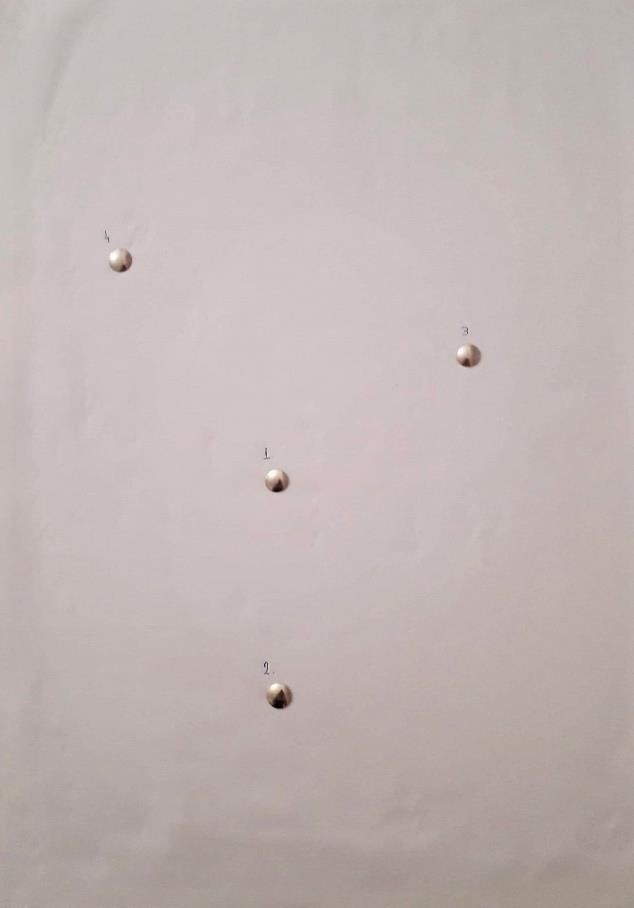
Παράρτημα: Εικόνες απτικής αποτύπωσης των σχετικών θέσεων των στοιχείων για κάθε πίνακα ζωγραφικής
1ος πίνακας ζωγραφικής: Τα φλαμίνγκο
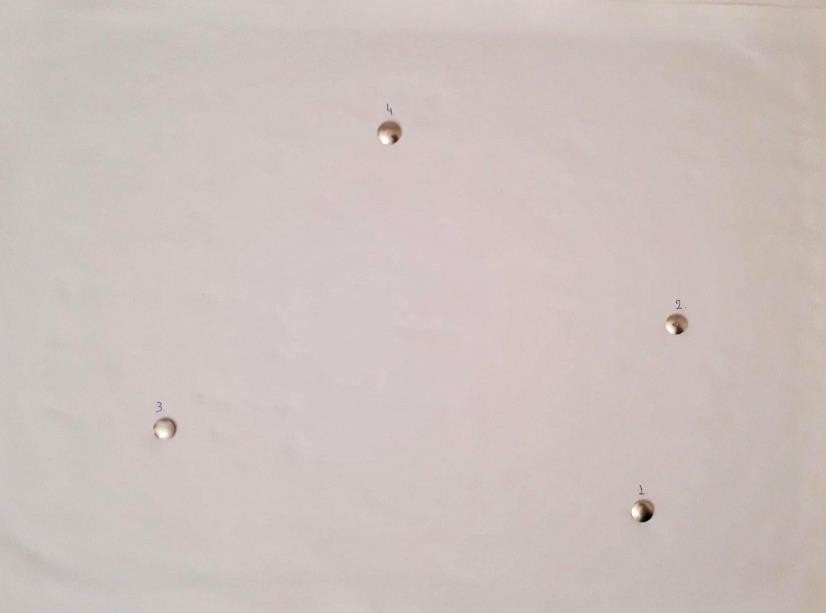
2ος πίνακας ζωγραφικής: Το κάρο του σανού
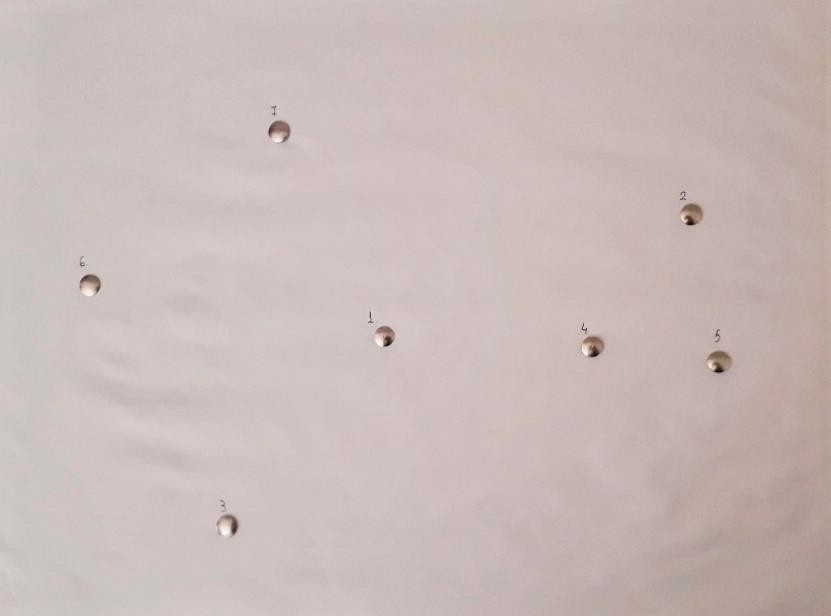
3ος πίνακας ζωγραφικής: Ο οδοιπόρος